Save Our Portland Trees
The environment, after all, is where we all meet; where we all have a mutual interest; it is the one thing all of us share. It is not only a mirror of ourselves, but a focusing lens on what we can become
Lady Bird Johnson, October 9, 1967
Introduction
Our home at 4609 SW 29th Place in Portland, Oregon sets in a quiet hillside cul-de-sac, only a ten minute drive from the city center. The cul-de-sac is the setting for eight homes altogether. There are no fences between the yards, just gentle transitions of one to the next delineated by clusters of mature trees, bushes and shrubs. The community is anchored by an enormous 250-year-old heritage Garry oak that sets majestically at its center. All of us who live within such a park-like setting acknowledge the beauty and appreciate the unique and precious space that we share. There is a commonly held sense of responsibility to steward and preserve this rare environment for following generations.
In the Beginning
We welcomed the new owners of the large, wooded property behind our home when they arrived in January 2016, excited that they’d found such a truly exceptional place to live. As our relationship developed in the initial Spring season, we learned of their long-term plans to build an ADU for a dependent family member. As much as we enjoyed the relatively open and natural space adjacent to our back yard, we respected their desire to build and were supportive of their plans. There was little concern around the overall impact to us and surrounding homeowners as there was plenty of open space to build. A thoughtfully designed structure could easily tuck in within the numerous large evergreen trees dotting its perimeter and create minimal negative aesthetic impact. Our only request was that any final construction plans minimize potential loss of the large tree canopy as it was so integral to the overall beauty and character of the neighborhood.
The new neighbors did not openly make any firm commitments. However, it seemed the unique wooded and open setting of the area was partially what drew them to relocate from the Bay Area and settle in SW Portland. There was at least a sense of common understanding around the value of the trees and a commitment to their preservation.
“The tree which moves some to tears of joy is in the eyes of others only a green thing which stands in the way… As a man is, so he sees.”
William Blake
There were casual references made to the ADU construction plans several times over the next couple of years with no specific details or timelines confirmed. Then in April, 2020, we observed stakes in the ground in the property owners’ backyard, located at various points that appeared to outline a building site. A follow-up inquiry confirmed that a building permit application had been submitted in January to the Bureau of Development Services and that the plan submitted called for the removal of all seven of the large, over 100 foot tall Douglas fir trees clustered in the northwest corner of the property. An eighth tree, also over 100 feet tall, in the abutting neighbors’ yard was in jeopardy of being taken down as well.
Enabled by the city statutes, plans to remove the trees were kept secret
The news of plans for so many trees to be removed came as a shock to the surrounding neighbors. It was at this time that we discovered that the current building permit application process does not require public notice be made to anyone regarding pending construction plans, not even homeowners living on abutting properties. Aware of the certainty in which their plans would create contention and despite our clear request to minimize loss of the large tree canopy, our neighbors kept their plans secret and took advantage of the City of Portland’s current building statutes. Theoretically, the surrounding neighbors could be kept unaware of such senseless and destructive plans right up to the point of the land being cleared.
A Senseless Plan
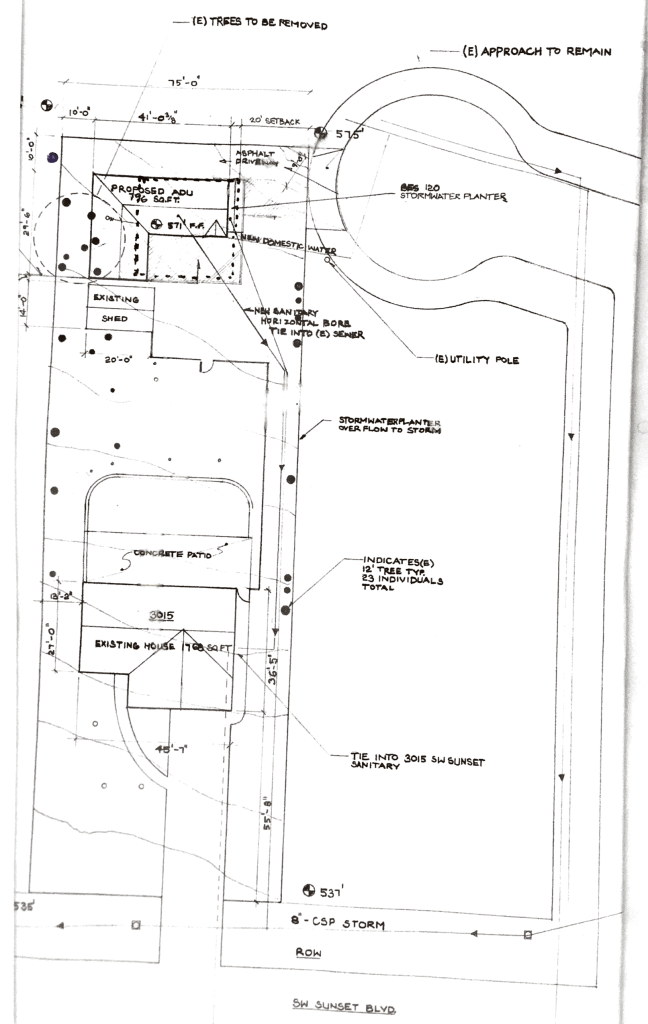
This site plan was obtained from the public records from the Bureau of Development Services. The black dotes indicate “large-form trees” growing on the property. The proposed ADU has 796 square feet of living space. However, it is designed into an “L” shape with a length of 41 feet and a width of 29 ½ feet, for a total footprint of 1,209 square feet. Note that even with this oversized, inefficient floor plan, the west edge of the proposed structure still only encroaches into the trees by a few feet. If a more efficient square or tight rectangular floor plan were used, there would be no need to cut any trees. In fact the large trees left on the property could be incorporated into a very attractive and welcoming outdoor living space. Also note the garden shed on the property that the owners refused to relocate in order to create more building space.
Both an ADU and the trees could have existed together.
 ____
____ 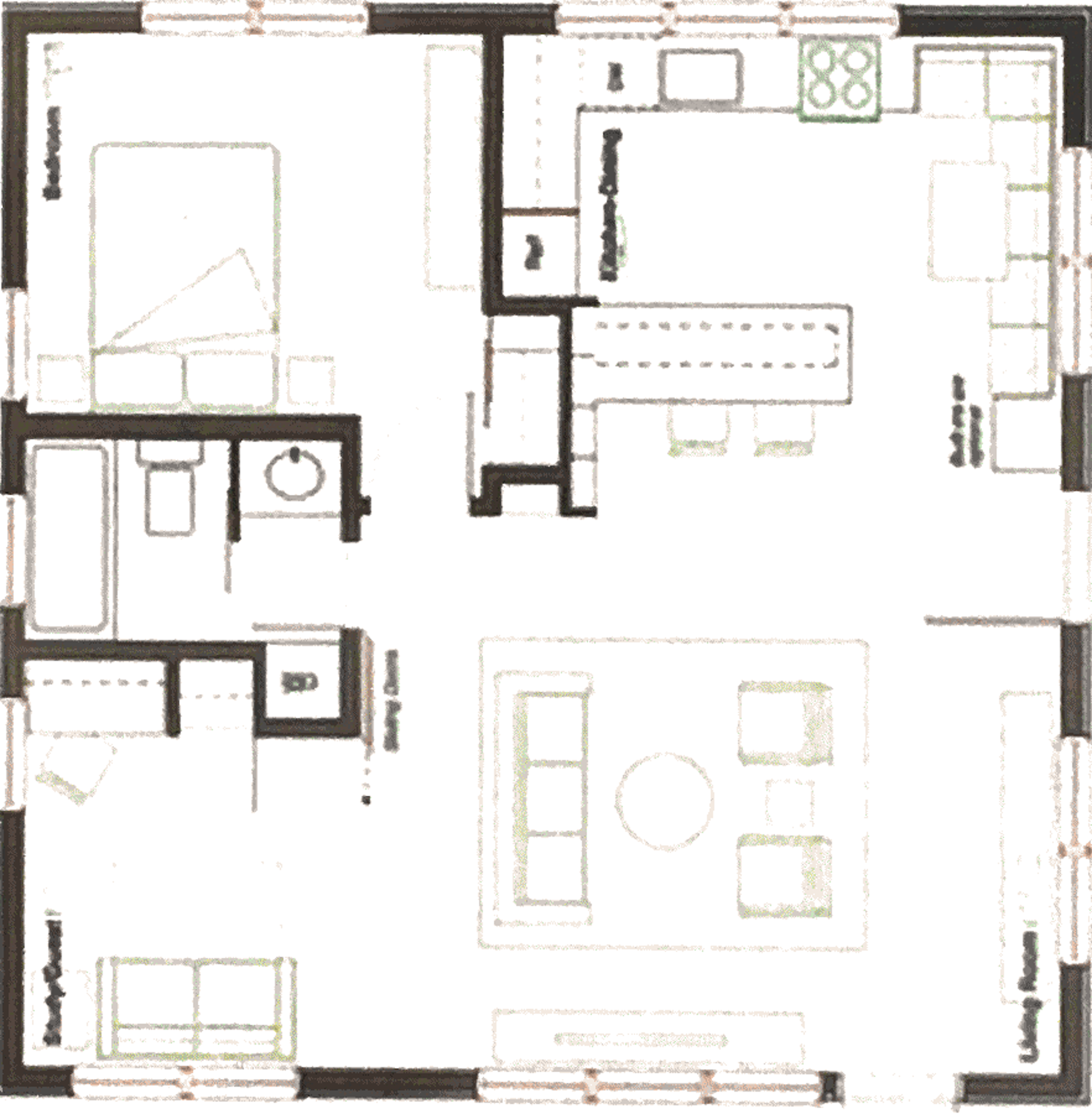
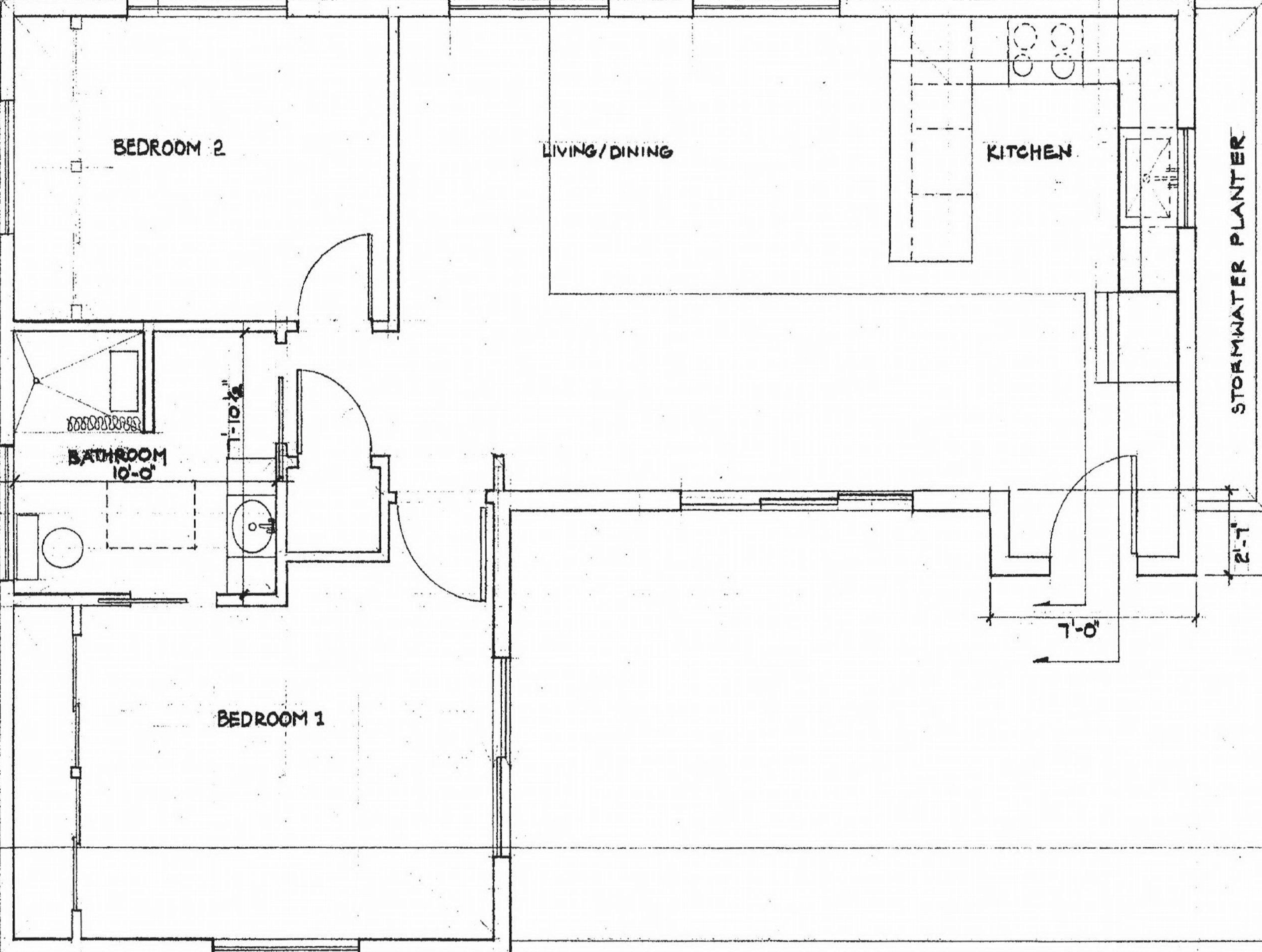
The floor plan on the left is what was built. The floorpan on the right is just an example of many “off the shelf designs” found on a local contractor’s website. It is the same square footage and number of rooms, but would have fit on the existing open space on the property. Both single level floorpans could be built as ADA compliant.
Current city codes place no restrictions on ill-conceived projects that make no effort to balance preservation of the environment with building density. There are only nominal “in lieu of preservation” fees for cutting down any tree over 36″ dbh (diameter at breast height). Although all of the trees that were removed were over 12″ dbh and therefore classified by the City as “large form”, none were 36″ diameter or larger and therefore subject to any financial penalty. Despite the significant negative impact to property values and aesthetics, adjacent neighbors have no means to assert any influence in the process. There is no place for public opinion and no means for appeal when such reckless and irresponsible development plans come to light. Current statutes do not even require abutting property owners to be advised of any construction plans.
Neighborhood Reaction
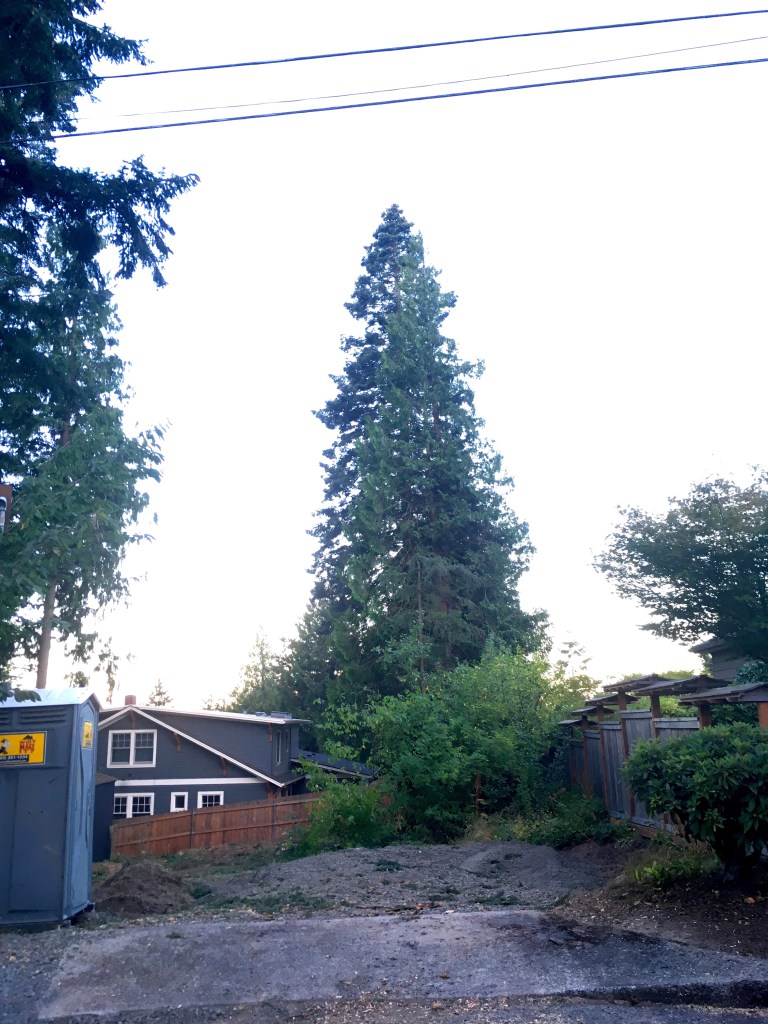
Because the site plan revealed how an ADU of the desired maximum 800 square feet could be constructed without removing any trees, emotion ran high when the news spread through the community. The unnecessary loss of trees, especially in times of escalating concern around climate change, seemed so senseless.
Much energy went into trying to change the plan. A group of cul-de-sac homeowners sent a letter to the property owners formally stating concerns about further tree loss and asking that they consider redesigning the ADU to preserve the trees. Our request was dismissed out of hand. Further appeals were made both collectively and individually. They were all treated with the same indifference by the property owners. The neighbors retained a highly experienced land use attorney in effort to find a mutually beneficial solution. An offer to share the costs to redesign plans in return for preserving the trees was summarily dismissed by the property owners without any efforts to negotiate. Unfortunately, all efforts to find an amenable arrangement were met with inflexibility, indifference and outright insensitivity. When the construction permit was issued in July, construction moved ahead as planned.
As part of the effort to save the trees, the Portland City Council members were advised of the situation. None so much as responded with any acknowedgement or outreach. Their lack of support or any action to counter our situation left many in our cul-de-sac community feeling ignored, oppressed and violated.
Unfortunately, our story is not unique. Read this powerful public testimony from Casey Clapp, a Tree Inspector for Portland’s Bureau of Urban Development. There are many similar situations, past and present, throughout Portland that could be remedied with the application of some thoughtful reform to current tree preservation codes. It will take pressure, however, from the community to obtain meaningful change. The one organization that is advocating for more sensibility around tree preservation is Trees for Life Oregon. Please support them. They published our story on their website as it unfolded.
The City that likes to call itself “green” is not making tree preservation a priority. One option concerned citizens have to save trees in similar jeopardy throughout Portland is to provide public input. Despite the neighborhood community’s intense effort, the battle for these eight trees was lost. But with public pressure, we can make a difference. Another place to make a difference is to support environmentally conscious builders and other businesses that can have the means to curtail irresponsible development by not choosing to participate in it. FIN Builders is the contractor of record on the building permit for the ADU project. Harrity Tree Specialists is the arborist that took down the the trees. Principals of both companies were made aware of the senseless and contentious nature of this project based on its complete disregard toward environmental impact. Both chose to accept to work on the project.
This site was created as a tool to gather input. Please submit comments in the “Reply” box at the bottom of this page. They will be forwarded to the Bureau of Development Services, the Department of Urban Forestry, the Bureau of Planning and Sustainability and City Council members. Also, please take a look at the archived page of previous comments left when this project was still in its planning stage.
Eight 100 foot tall trees in our neighborhood are now lost forever. But with a collective effort, others can be saved from such reckless and irresponsible development.
Thanks to all that support the cause.
Ron Minter
“The indifference towards old trees makes a mockery of our supposed new respect for the environment”.
Thomas Pakenham
For those interested in learning more about the importance of trees, here is a great read you can pick up at Powell’s.
Here is another, “Remarkable Trees of the World” by Thomas Pakenham.
*Here is a list of all the birds that have been sighted in the immediate vicinity of the trees:
- Junco
- Black Headed Grosbeak
- Pileated Woodpecker
- Wren
- Robin
- Meadowlark
- Warbling Vireo
- Peregrine Falcon
- Common Ground Dove
- Swallow
- Anna’s Hummingbird
- Brown Creeper
- Gold Finch
- Western Tanager
- Hairy Woodpecker
- Black Cap Chickadee
- Nuthatch
- Hermit Thrush
- Crow
- Owl
- Scrub Jay
- Song Sparrow
- Rufus Hummingbird
- Red Finch
- Bohemian Waxwing
- Flicker
- Brown Cap Chickadee
- Yellow Warbler
- Varied Thrush
- Hawk
- Mourning Dove
- Stellar Jay
- Blue Heron
- Towhee
“To understand and be understood, those are among life’s greatest gifts, and every interaction is an opportunity to exchange them. There is nothing more difficult yet more gratifying in our society than living with sincerity and acting from a place of largehearted, constructive, rational faith in the human spirit, continually bending toward growth and betterment. This remains the most potent antidote to cynicism. Today, especially, it is an act of courage and resistance.“
Debbie Millman
 Save Our Portland Trees